


A Survivor of Conflict, Gita Rasaili Is Still Fighting for Transitional Justice in Nepal


From a Dalit community in rural Kavre to the leadership of a national survivors’ network, Gita Rasaili’s journey connects personal loss with Nepal’s unfinished struggle for truth, accountability and dignity.
NEPALISM EXCLUSIVE— Nearly two decades after Nepal’s armed conflict ended, Ms. Gita Rasaili continues to carry its consequences into her daily work. They live in the memory of her sister, Rina Rasaili, in the questions her family has carried for years, and in the experiences of women still seeking recognition and justice through the country’s unfinished peace process.
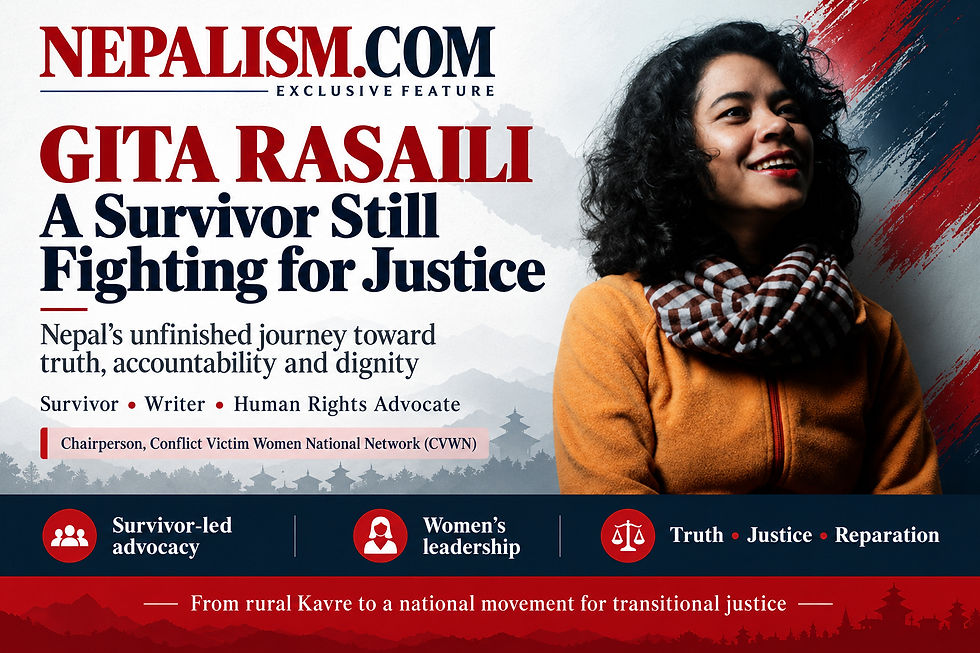
A survivor, writer and human rights advocate, Ms. Rasaili has transformed personal grief into a sustained commitment to accountability and healing. As Chairperson of the Conflict Victim Women National Network (CVWN), she works to ensure that conflict-affected women can influence decisions about truth, reparation, peacebuilding and their own futures.

Her advocacy draws on experiences that began before the war: poverty, caste discrimination and gender inequality in a rural Dalit community. The conflict deepened those injustices, bringing devastating losses to her family and setting her on a long journey to seek justice.
Her story raises a question that reaches far beyond one household: What does peace mean when those who endured war are still waiting for answers?

Before the Conflict, a Childhood Marked by Exclusion
Born into a Dalit family in rural Kavre, Ms. Rasaili encountered discrimination long before she understood the social structures behind it.

In a published interview with Peace Brigades International UK, she recalled being excluded from classmates’ homes and prevented from collecting drinking water herself at school. Activities that other children took for granted were restricted for her.
She also described challenging those restrictions by touching a water pot she had been taught to avoid. When the harm she had been warned about did not occur, she began questioning the beliefs used to justify her exclusion. Small acts of defiance gradually strengthened her confidence to demand equal treatment.
Those childhood experiences help explain the wider concerns behind her advocacy. A justice process must be accessible to people whose voices have been diminished by caste, gender and poverty. Creating a complaint mechanism is only one step; ensuring that marginalized survivors can use it safely and meaningfully requires sustained attention.
A Family’s Loss and a Continuing Search for Justice
Nepal’s 1996–2006 armed conflict devastated Rasaili’s family. Accounts published by UN Women document the deaths of her brother, Arpan Rasaili, and her sister, Rina Rasaili. The loss of her sister became a defining part of her pursuit of justice.
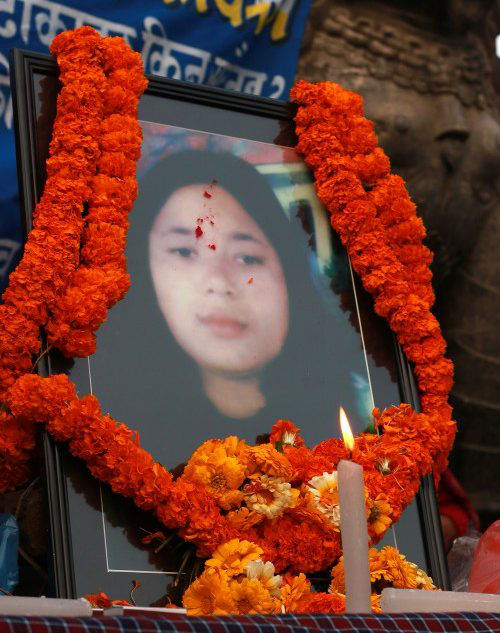
Remembering Rina Rasaila. (Photo: Voices of Women Media)
In her interview with Peace Brigades International UK, Ms. Rasaili described her father initiating the family’s legal efforts and her later assuming that responsibility.
Over time, her search brought her into contact with survivors whose families had suffered at the hands of different parties to the conflict. Working alongside a woman whose husband had been killed by Maoists helped her recognize common ground across political divisions.
An earlier UN Women profile likewise described how transitional justice training helped Rasaili recognize the shared suffering of survivors, regardless of which side had harmed them.
That understanding became central to her work. Families should be able to seek accountability without having their losses judged through political loyalties. Every survivor deserves a fair hearing, and every allegation of serious abuse deserves credible investigation.

Women Organizing to Shape the Peace Process
Established in 2020 by women affected by Nepal’s armed conflict, Conflict Victim Women National Network (CVWN) works to advance survivors’ rights, dignity and leadership. According to the organization, its network reaches more than 45 districts across all seven provinces, connecting conflict-affected women with local authorities and organizations engaged in peacebuilding and transitional justice.
Its philosophy—Change, Engage, Empower and Transform—connects the pursuit of truth and reparation with psychosocial support, leadership development and women’s economic, social and cultural rights.
This approach recognizes how deeply conflict can affect everyday life. Survivors may need support to sustain their families, recover emotionally, navigate institutions and speak about experiences that carry social stigma.
CVWN’s Strengthening Access to Justice initiative, implemented with Nagarik Aawaz, combined leadership development and mental health support with peacebuilding, livelihood concerns and documentation of women’s experiences.
Documentation serves several purposes. It can preserve evidence, strengthen public memory and recognize the work through which women helped their families and communities survive. It also creates space for survivors to describe their lives in their own words.
Under Ms. Rasaili’s leadership, the network’s mission places women’s participation at the center of the peace process. Their experiences and knowledge can help determine whether policies respond to the realities survivors face.
The Scale of Nepal’s Unfinished Justice Process
The complaints before Nepal’s transitional justice bodies reveal the scale of the work still ahead.
The Truth and Reconciliation Commission (TRC)’s four-year strategic plan records 63,718 complaints received before the third amendment to the governing law. It lists 11,599 additional complaints afterward, excluding separately recorded new complaints concerning rape or serious sexual violence.
Those new sexual violence complaints number 3,912. Combined with the earlier 314, the plan records 4,226 complaints concerning rape or serious sexual violence and an overall pending caseload of 79,229 complaints and applications.
These figures represent recorded allegations awaiting examination. They do not, by themselves, establish responsibility or indicate how many survivors have received justice.
The separate Commission of Investigation on Enforced Disappeared Persons reports 3,358 registered complaints, with 756 disposed of and 2,602 undergoing detailed investigation. Disposal does not necessarily mean a family has received answers: published administrative categories include transfers to the TRC, removal of duplicate entries and complaints placed on file.
Behind every category are families seeking information about someone they loved, recognition of the harm they endured and a credible response from the state.
For advocates such as Ms. Rasaili, the challenge is to turn these records into meaningful investigations, accountability and reparation.
Making Justice Accessible to Women
Women affected by conflict-related sexual violence can face particular obstacles in seeking justice. Fear of stigma, concerns about confidentiality and the difficulty of recounting traumatic experiences may discourage participation or make it deeply distressing.
The increase in recorded sexual violence complaints underscores the need for a process that protects survivors’ dignity. Registration must be followed by safe opportunities to give testimony, appropriate psychosocial support and investigations capable of examining events that occurred many years ago.
CVWN identifies sexual violence, torture and their physical and psychological consequences as central concerns. Its work connects those experiences with women’s needs in transitional justice and reparation.
Ms. Rasaili’s leadership also challenges the way survivors are represented. Conflict-affected women possess knowledge about their communities, the consequences of violence and the barriers to obtaining help. Their participation can improve decisions about outreach, testimony, support and remedies.
Recognition becomes meaningful when women have the power to help shape the process.
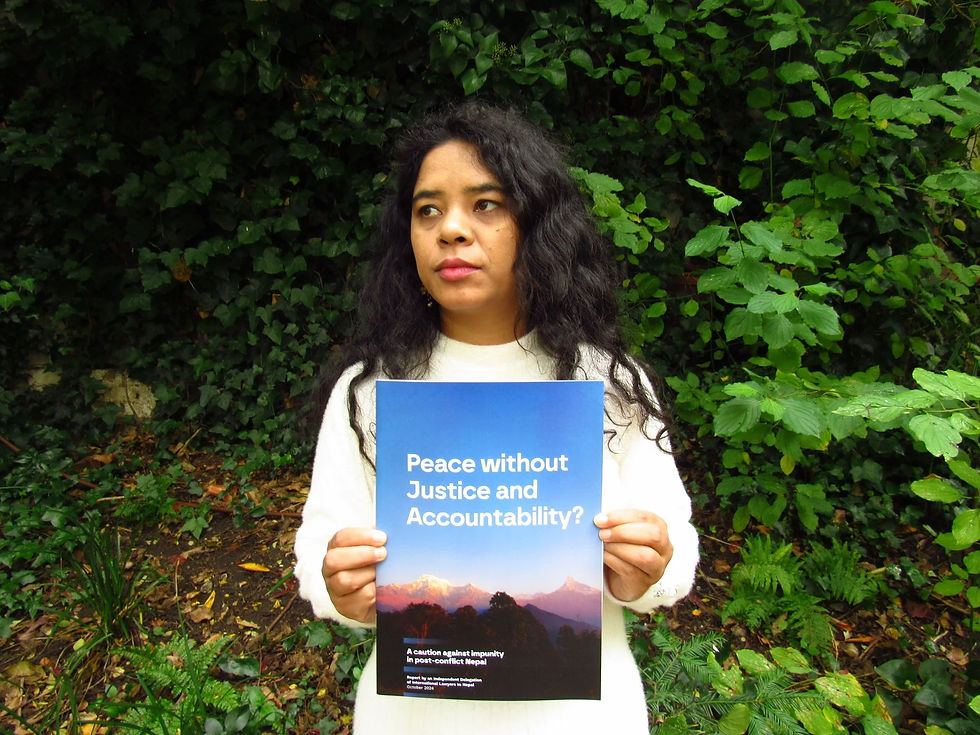
A Public Voice Across Generations
Ms. Rasaili’s advocacy now extends beyond her family’s case and the network she leads.
In April 2026, she joined Amnesty International Nepal Chair Bipin Budhathoki in unveiling the organization’s global human rights report in Kathmandu. Amnesty identified her as a human rights defender and Chairperson of CVWN, reflecting her continuing presence in Nepal’s public human rights debate.
She also participated in Nepal’s recent Gen Z civic movement, advocating democratic participation and social justice.
That engagement connects her longstanding pursuit of accountability with a younger generation’s demands for responsive institutions. It brings the unfinished concerns of conflict survivors into conversations about Nepal’s democratic future.
Across generations, the question remains urgent: Can people historically excluded from power meaningfully influence the decisions that affect their lives?
Peace Measured in Survivors’ Lives
Ms. Rasaili’s journey demonstrates persistence, but it also reveals the cost of prolonged waiting. Years spent pursuing justice are years spent carrying grief, approaching institutions and explaining why unresolved cases still matter.
Her work points to obligations that praise for survivors’ courage cannot fulfill. Families need credible investigations and answers. Women need safe and respectful participation. Those harmed need appropriate reparation, and the country needs a public record that acknowledges their experiences.
The accounts published by UN Women in 2011 and 2020, reproduced below as supplied, show how long Rasaili has pursued these goals. References to her roles, organizations and government processes reflect the time of each article’s publication.
Today, the search rooted in her family’s loss continues through a collective struggle involving women across Nepal.
For Gita Rasaili, peace must become something survivors can experience in their own lives: truth about what happened, accountability for wrongdoing, and the dignity to help shape what comes next.
⸻
From UNWomen:
Stories of Peace Builders from Nepal’s Armed Conflict
Now we are not just helpless ’victims’ but are active agents driving justice forward
Gita Rasaili, an activist for the victims of Armed Conflict in Nepal. Graphic: UN Women Nepal/Subeksha Poudel
When we heard that the Nepali army murdered Dai (brother) our relatives told us not to cry. “What if people found out? What if the police found out? Don’t cry,” they said. The army killed Dai assuming he was a Maoist (the then opposing group) in the armed conflict. If the villagers found out about Dai’s death, they would also assume that all of us were Maoists and start ostracizing us.
So, none of us could cry and Aama(mother) kept fainting. When we felt like crying, we went inside the house, cried for a bit and came out as if everything was normal. It still haunts me, how we could not even mourn when they murdered Dai.
Earlier we participated as ‘victims’ in events that sought justice for the people lost in armed conflict. We would share our stories of torture, re-live our grief and return home. Now we are not just helpless ’victims’ but are active agents driving justice forward. The UN in Nepal supported the Government of Nepal to engage victims of armed conflict in the government’s National Action Plan drafting committee. Our role in this drafting committee was critical. We prepared the National Action Plan Phase II prioritizing the need for investigation of the perpetrators, availing access to justice and reparation for victim’s families. Such efforts keep us going. But the sad part is that we are still waiting for the cabinet to approve the action plan for more almost a year.
Rasaili lost her brother on 4th February 2001 and her sister after she was gang raped at home by the Nepal army on 13thFebruary 2004 in the armed conflict of Nepal.
— Gita Rasaili, Kavre, Nepal
An activist for the victims of the Armed Conflict
From UNWomen:
Gita Rasaili: A woman of courage rebuilds her life in Nepal
In her young life, Gita Rasaili of Kavre village, Nepal has seen her family torn apart by the ten-year conflict that has plagued her country. Her brother, Arpan Rasaili, was killed in an encounter. Just two years later, members of the Royal Nepalese Army stormed her house at midnight and killed her sister, Rina Rasaili.
Until then, Gita believed that the only real conflict victims were those who had been victimized by the actions of the state. When she was brought together with victims from the Maoist side by the programme, it dawned on her that “the pain they feel is just the same”.
The armed conflict, which shook Gita’s life, has, to date, led to an estimated 13,256 deaths, according to the Informal Sector Service Centre (INSEC), a Nepali human rights group. It has also caused gross human rights violations such as mass killings, disappearances, torture, massive displacement of civilians and rapes of women.
Gita says that the International Center for Transitional Justice’s (ICTJ) Training of Trainers (TOT) programme, which was supported by UNIFEM (now UN Women), helped her rise above party politics and see victims as just victims; regardless of which side harmed them. In Nepal, UN Women does this to promote and strengthen women’s leadership to ensure their equal rights in building nations.
Gita Rasalli learns from others
Following the training, Gita organized her own training programme on transitional justice in Kavre. In her training she shared information about the Interim Relief scheme and the processing of applications. As a result, two conflict victims who had never heard of the relief programme, have now submitted applications for relief.
Gita currently runs her own organization called Rina Arpan Dalit Uthan Manch. The organization is staffed by conflict victims and works for victims as well as for the abolishment of untouchability. The organization has implemented some income generating activities and advocacy programmes. Gita affirms that learning about transitional justice taught her that she does not need to forget the past.
She feels that perpetrators need to be brought to justice and she will continue to fight for this cause.



Comments